
density_small
search

.jpg_1786510803.jpg)









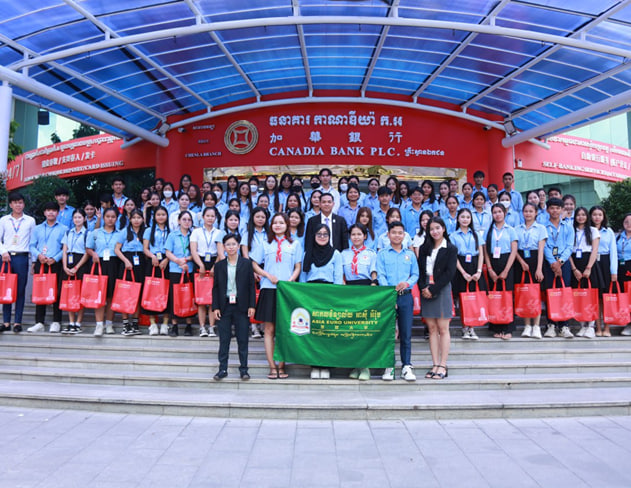



The Faculty of Social Sciences and Economics is a well-regarded faculty among the five faculties of Asia Euro University. It plays a key role in educating and training human resources in areas such as Banking and Finance, Economics, Community Development, and International Business.
Following the national, regional, and international quality frameworks, each program is aligned with the social and professional context, responding to labor market demands while also providing opportunities for successful entrepreneurship. The Faculty of Social Sciences and Economics continues to strengthen and develop its educational programs to ensure high quality and effectiveness, equipping students with the resilience needed to compete in both national and international labor markets.
To provide a clear strategic direction, the Faculty has focused on human resource development as a priority, emphasizing responsibility. Its goal is to nurture students into creative, highly competent professionals in their respective fields, combining theoretical knowledge, practical skills, and strong professional ethics.
The Faculty’s educational programs are designed based on scientific, technical, and pedagogical principles. Teaching and research activities conducted by lecturers and students aim to develop knowledge, practical skills, and professional ethics according to each field of study, as outlined below:
1. Economics Major: The Bachelor’s and Associate Degree programs in Economics are fields of study that focus on understanding how individuals, businesses, and governments allocate scarce resources to satisfy unlimited wants and needs. It examines the production, distribution, exchange, and consumption of goods and services within society.
Studying Economics enables students to understand various economic issues, such as economic growth, inflation, unemployment, investment, and international trade. Students learn economic theories and principles, as well as data analysis, to identify and understand economic problems and develop appropriate solutions.
This major plays an important role in national socio-economic development because it contributes to effective planning, resource management, and policymaking. In addition, it develops students’ abilities in analytical thinking, research, and evidence-based decision-making, enabling them to make decisions based on data and sound reasoning.
The study of Economics is broadly divided into two major branches: Microeconomics and Macroeconomics. Microeconomics examines the behavior and decision-making of individuals, consumers, and businesses within markets, whereas Macroeconomics studies the economy as a whole, including Gross Domestic Product (GDP), inflation rates, interest rates, and government economic policies.
In conclusion, Economics is an important field of study that provides knowledge of how economic systems function and prepares students with the competencies needed to contribute effectively to the development of organizations, businesses, and the national economy.
2. Banking and Finance Major: The Bachelor’s and Associate Degree programs in Banking and Finance are fields of study that focus on the management, administration, and analysis of financial systems at the individual, business, and national economic levels. It is an important field that promotes the efficient, secure, and transparent use of money and financial resources.
The study of this major aims to provide students with knowledge of how banks and financial institutions operate, including deposit-taking, lending, credit management, and investment. At the same time, students learn key financial principles, such as risk management, financial market analysis, and financial planning.
The Banking and Finance major focuses not only on theoretical knowledge but also on practical applications, including economic data analysis, the use of modern financial instruments, and informed investment decision-making based on reliable and accurate information.
Furthermore, this field plays an important role in national economic development by facilitating the flow of capital in financial markets, supporting businesses, and creating employment opportunities. Banks and financial institutions also play a central role in maintaining economic stability and promoting rapid economic growth.
3. Community Development Major: The Bachelor’s and Associate Degree programs in Community Development are fields of study that focus on improving the quality of life and well-being of people within communities through community participation, effective utilization of community resources, and sustainable social, economic, and environmental development.
Studying this major enables students to understand community issues, challenges, and needs, while developing knowledge of methods for planning, implementing, and evaluating development projects. Students study community leadership, project management, social research, poverty reduction, rural development, and community capacity building.
The Community Development major plays an important role in addressing various social challenges, including poverty, unemployment, lack of access to education, public health issues, and environmental conservation. Through community participation and collaboration with various organizations, this field contributes to building resilient, self-reliant, and sustainable communities.
In conclusion, Community Development is a field of study that provides knowledge and skills for human and social development, with a strong emphasis on community participation and sustainable development. It aims to promote the well-being and quality of life of people by strengthening community capacity and fostering inclusive and sustainable development.
In conclusion, studying Banking and Finance is an important choice for individuals who wish to pursue careers in banking, investment, financial management, or economics, as it provides comprehensive knowledge and practical skills that can be widely applied in the real-world work environment.
4. International Business Major: The Bachelor’s and Associate Degree programs in International Business is a field of study that focuses on the exchange of goods, services, capital, and information among countries around the world. In the current era of globalization, countries have become increasingly interconnected through economic and trade relations, making international business an essential driver of economic growth, investment, and employment generation.
Studying this major provides students with knowledge of international trade principles, import and export operations, logistics and supply chain management, international markets, the global economy, customs procedures, and international trade agreements. In addition, students develop skills in market analysis, business negotiation, international operations management, and the application of technology in international trade.
The International Business major plays an important role in developing human resources with the competencies required to compete in both national and international labor markets. Upon graduation, students can pursue careers in import-export companies, logistics and supply chain companies, banks, government institutions, national and international organizations, and can also establish and manage their own businesses.
5. Taxation Major: The Bachelor’s and Associate Degree programs in Taxation are fields of study that focus on understanding the laws, regulations, and procedures related to tax administration and tax collection by the government. This major plays an important role in national economic development by helping ensure the effective, transparent, and equitable collection of public revenue.
Students majoring in Taxation acquire knowledge of various types of taxes, tax computation, the preparation and filing of tax returns, and the application and enforcement of tax laws within business and institutional contexts. In addition, the Taxation major develops skills in analytical thinking, problem-solving, tax advisory and consultancy, and the use of electronic tax systems for tax-related operations.
Students are also expected to develop professional responsibility and integrity, comply with laws and professional standards, demonstrate the ability to work effectively in teams, and communicate professionally with clients and government institutions. These competencies provide a strong foundation for future careers in accounting, finance, auditing, and tax consultancy.
The professional practice of Taxation not only facilitates the accurate preparation and filing of tax returns, but also contributes to strengthening the capacity of tax authorities and institutions to effectively fulfill their roles as a fundamental component of the national economy.
Therefore, studying Taxation is highly important for developing technical expertise and professional competencies, preparing graduates for a successful and sustainable career in the taxation and related financial professions.
In conclusion, studying International Business provides an essential foundation for understanding global business operations and international trade, while developing professional competencies that respond to the demands of the modern global economy.
6. Auditing Major: The Bachelor’s and Associate Degree programs in Auditing focus on the process of examining, evaluating, and verifying an entity’s financial information, internal control systems, and operations to ensure that such information is accurate, reliable, and compliant with applicable laws, regulations, and relevant standards, particularly accounting, financial reporting, and auditing standards.
Studying Auditing is highly important in the fields of accounting and business management, as it equips students with the knowledge and skills required to examine financial records, evaluate internal control systems, identify and assess risks, and provide recommendations to improve the operational efficiency and effectiveness of an organization.
The Auditing major covers several key areas, including accounting principles, auditing standards, risk management, internal controls, professional ethics, and audit evidence-gathering procedures and techniques. Understanding these areas enables auditors to perform their professional responsibilities with independence, transparency, objectivity, and a high level of effectiveness.
Overall, studying Auditing provides an essential foundation for developing qualified professionals who can contribute to ensuring the reliability and credibility of financial information and promoting good governance in both public and private sector organizations.
7. Risk Management and Insurance Major: The Bachelor’s and Associate Degree programs in Risk Management and Insurance focus on the study of risk in modern society and the economy. Individuals and organizations are constantly exposed to various risks, including natural disasters, fire, traffic accidents, property loss, and financial risks. These risks can result in significant losses for individuals, families, businesses, and society as a whole. Therefore, risk management and insurance have become essential fields for reducing and managing the potential impacts arising from such risks.
The Risk Management and Insurance major focuses on the identification, assessment, analysis, and treatment of risks through various risk management strategies and techniques. At the same time, it examines the role of insurance in transferring risk from individuals or business entities to insurance companies in order to mitigate potential financial losses.
Studying this major provides students with knowledge and skills in risk analysis, risk planning and management, insurance products, claims management, and financial decision-making. These competencies are essential for careers in insurance companies, banks, financial institutions, private enterprises, and government institutions.
In conclusion, Risk Management and Insurance is an important field that plays a vital role in ensuring financial stability and sustainable development for individuals, organizations, and society. Studying this major enhances students’ capacity to prevent, mitigate, and effectively manage risks in a rapidly changing and increasingly complex world.
The Faculty of Social Sciences and Economics aims to be a leading faculty in providing knowledge, skills, competencies, and professional ethics, preparing students to become valuable human resources across all sectors.
To respond to and achieve the above vision, the Faculty of Social Sciences and Economics has established the following key missions:
1.Strengthen governance over the administration and management of the faculty’s academic operations to ensure high efficiency.
2. Promote teaching and learning among lecturers and students through research-based approaches.
3.Develop relationships with stakeholders, both domestically and internationally, and establish partnerships aimed at benefiting the faculty.
4.Encourage and cultivate students’ mindset to be courageous, self-confident, respectful, caring, and highly responsible toward society and the nation.
5.Promote and provide training in professional skills, foreign languages, information technology, and communication systems to further enhance students’ core competencies.
To achieve the above vision and mission, the Faculty of Social Sciences and Economics aims to create and promote core values by enhancing the quality of education with high competence. This includes ensuring recognition and support from students across all levels, as well as from relevant partner stakeholders. Through this strength, the faculty will attract increased student enrollment across all disciplines in the following academic years.


